
Refractory Library
High alumina, mullite and fireclay bricks for hot blast stoves and coke dry quenching
Grades with full chemistry, density, strength and creep data. Selected, checked and supplied from China by GZ Visions, Shanghai.
Quick answer
GZ Visions supplies low creep high alumina, andalusite mullite, combined mullite, corundum and cordierite, and fireclay bricks for hot blast stoves, and fireclay, mullite and mullite silicon carbide bricks for coke dry quenching furnaces. Al₂O₃ runs from 35% to 80%, and every GZ grade is listed with its density, strength and creep limits.
Hot blast stoves
Bricks for hot blast stoves
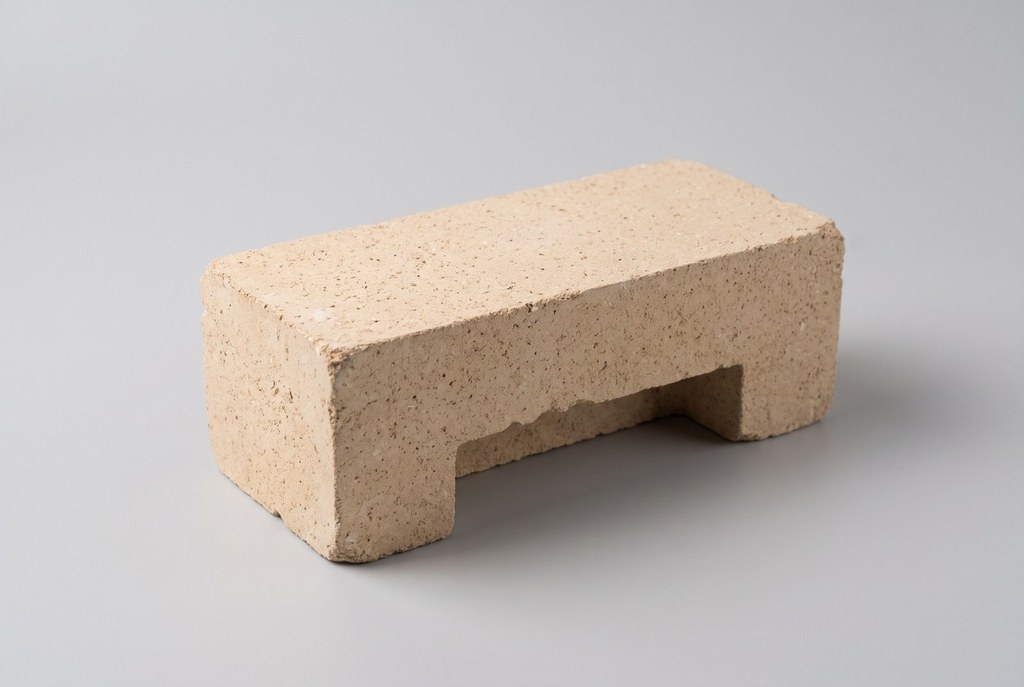
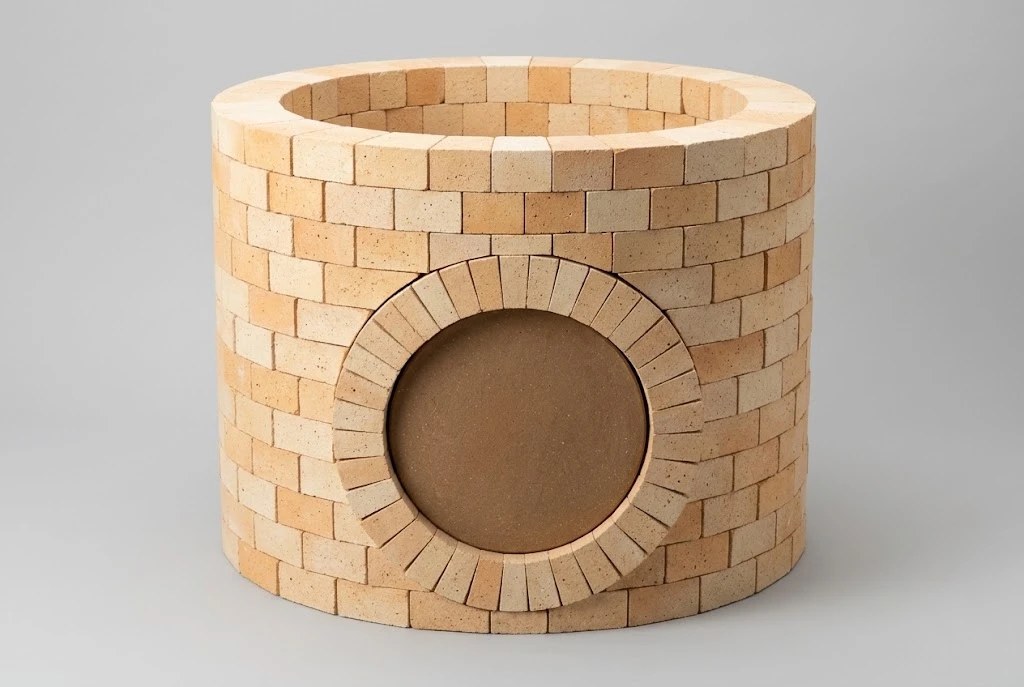
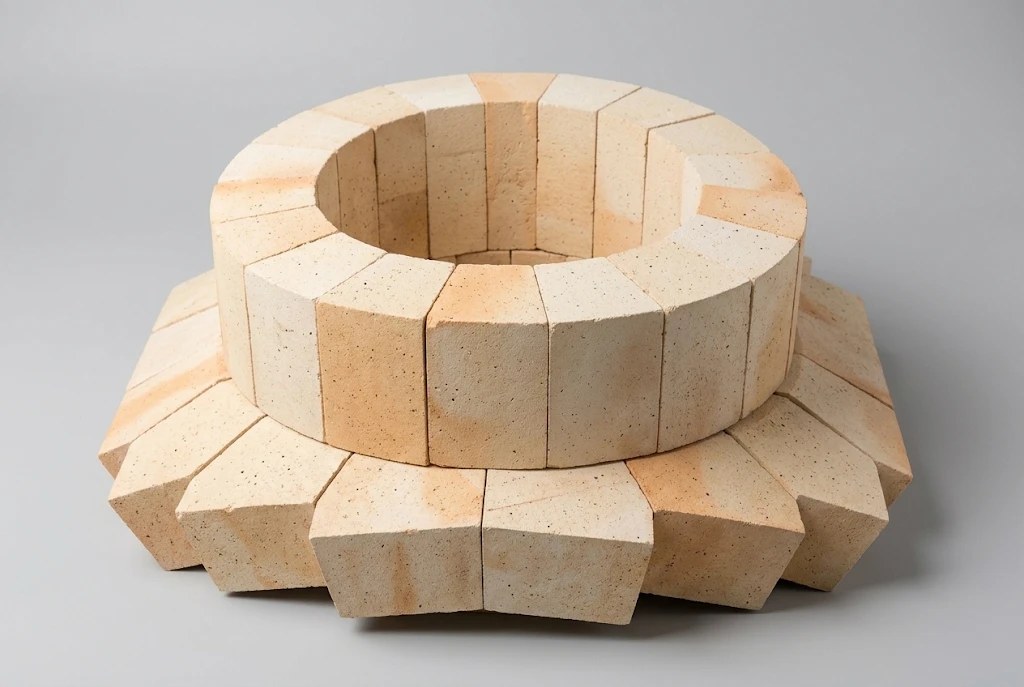
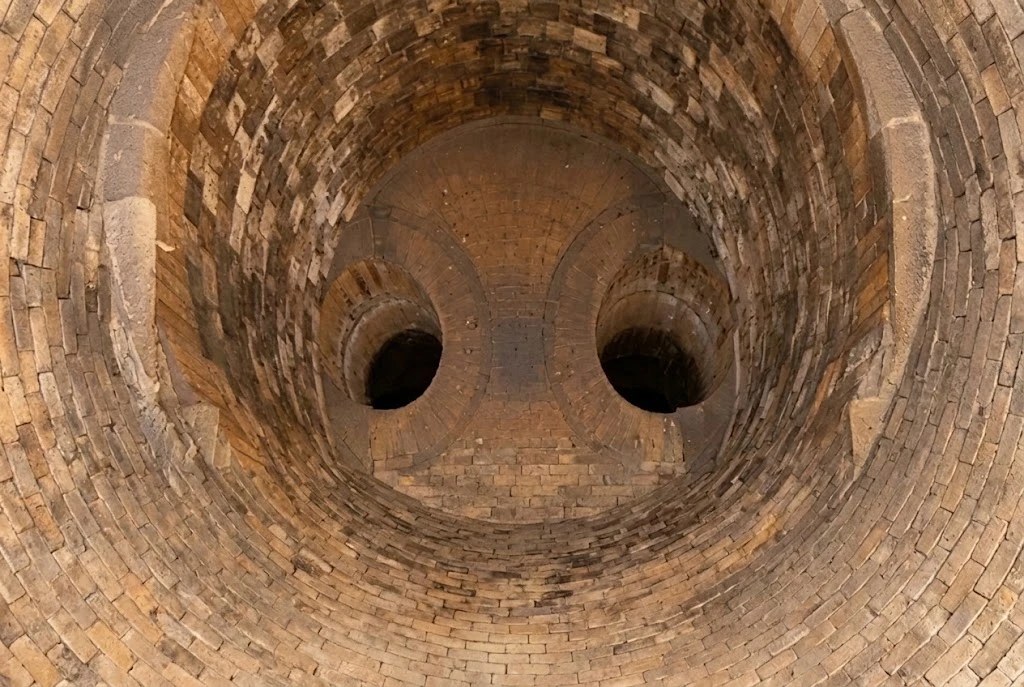
A hot blast stove brick carries load for years at high temperature, so creep, the slow deformation under load, matters more than strength at room temperature. Each grade below lists its creep limit at the temperature it was tested, together with refractoriness under load (RUL) and the liner change after reheating.
The low creep high alumina grades run from 50 to 80% Al₂O₃. Andalusite mullite grades run from 53 to 65% and list refractoriness under load at three deformation levels. Combined mullite, combined brown corundum and cordierite bricks, and fireclay bricks, complete the range.
How to read the tables: values are specification limits, not averages. A dash means the supplier lists no value. GZ grade codes are GZ Visions designations, and each specification is listed once.
Low creep high alumina bricks for hot blast stoves
Al₂O₃ and Fe₂O₃ in % (Al₂O₃ minimum, Fe₂O₃ maximum). Apparent porosity in % (maximum). Bulk density in g/cm³ (minimum). Cold crushing strength (CCS) in MPa (minimum). Refractoriness and refractoriness under load (RUL, 0.2 MPa, T0.6) in °C (minimum). Creep at 0.2 MPa, rate in % (maximum) at the temperature shown. Liner change after reheating in % (maximum) at the temperature shown.
| GZ grade | Al₂O₃ | Fe₂O₃ | Porosity | Density | CCS | Refractoriness | RUL | Creep | Liner change | Thermal shock cycles |
|---|---|---|---|---|---|---|---|---|---|---|
| GZ HA-01 | 80 | 1.3 | 21 | 2.7 | 55 | 1850 | - | 0.4 (1450 °C) | ±0.2 (1500 °C) | 12 |
| GZ HA-02 | 80 | 1.00 | 21 | 2.65 | 45 | 1850 | - | 0.8 (1450 °C) | 0.2 (1550 °C) | - |
| GZ HA-03 | 75 | 1.5 | 20 | 2.7 | 60 | 1790 | 1600 | 0.5 (1400 °C) | ±0.1 (1500 °C) | 10 |
| GZ HA-04 | 75 | 1.00 | 20 | 2.60 | 55 | 1850 | - | 0.8 (1450 °C) | 0.2 (1550 °C) | - |
| GZ HA-05 | 65 | 1.5 | 21 | 2.6 | 55 | 1790 | 1600 | 0.5 (1300 °C) | ±0.1 (1500 °C) | 8 |
| GZ HA-06 | 65 | 1.00 | 19 | 2.45 | 55 | 1850 | - | 1.0 (1450 °C) | 0.2 (1450 °C) | - |
| GZ HA-07 | 65 | 1.00 | 23 | 2.40 | 45 | 1820 | - | 0.8 (1400 °C) | 0.2 (1400 °C) | - |
| GZ HA-08 | 65 | 1.00 | 20 | 2.1 | 60 | 1790 | - | 0.7 (1450 °C) | 0.2 (1450 °C) | - |
| GZ HA-09 | 60 | 1.00 | 23 | 2.30 | 40 | 1790 | - | 0.8 (1300 °C) | 0.2 (1300 °C) | - |
| GZ HA-10 | 50 | 1.00 | 23 | 2.20 | 40 | 1770 | - | 0.8 (1270 °C) | 0.2 (1270 °C) | - |
| GZ HA-11 | 50 | 2.00 | 24 | 2.1 | 35 | - | - | - | - | - |
Andalusite mullite bricks for hot blast stoves: chemistry and strength
Oxides and alkalis in % (Al₂O₃ minimum, the rest maximum). Apparent porosity in % (maximum). Bulk density in g/cm³ (minimum). CCS and cold modulus of rupture in MPa (minimum). Thermal shock: cycles of 1100 °C water cooling (minimum).
| GZ grade | Al₂O₃ | Fe₂O₃ | TiO₂ | Alkali | Impurities | Alkali + impurities | Density | Porosity | CCS | Cold MOR | Thermal shock cycles |
|---|---|---|---|---|---|---|---|---|---|---|---|
| GZ AND-01 | 65 | 0.8 | 0.5 | 0.6 | 0.7 | 1.2 | 2.4 | 22 | 40 | 15 | 20 |
| GZ AND-02 | 57 | 0.8 | 0.5 | 0.6 | 0.7 | 1.2 | 2.35 | 22 | 40 | 12 | 20 |
| GZ AND-03 | 53 | 1.7 | 0.6 | 0.6 | 0.7 | 1.2 | 2.3 | 22 | 50 | 12 | 20 |
Andalusite mullite bricks for hot blast stoves: behaviour at temperature
Liner change after reheating, in %, at the temperature and time shown. Creep at 0.2 MPa (20 to 50 h), rate in % (maximum). Refractoriness under load at 0.2 MPa, in °C (minimum), at 0.5%, 2.0% and 5.0% deformation.
| GZ grade | Liner change | Creep | RUL at 0.5% | RUL at 2.0% | RUL at 5.0% |
|---|---|---|---|---|---|
| GZ AND-01 | -0.2 to 0.2 (1450 °C, 2 h) | 0.2 (1450 °C) | 1520 | 1630 | 1650 |
| GZ AND-02 | -0.2 to 0.2 (1400 °C, 2 h) | 0.2 (1400 °C) | 1470 | 1580 | 1600 |
| GZ AND-03 | -0.2 to 0.2 (1400 °C, 2 h) | 0.2 (1300 °C) | 1350 | 1490 | 1560 |
Combined mullite, combined corundum and cordierite bricks for hot blast stoves
Al₂O₃ and Fe₂O₃ in %. Other: SiC or MgO in %. Apparent porosity in % (maximum). Density in g/cm³ (minimum). CCS in MPa (minimum). RUL at 0.2 MPa, T0.6, in °C (minimum). Liner change after reheating in % at the temperature shown.
| GZ grade | Type | Al₂O₃ | Fe₂O₃ | Other | Porosity | Density | CCS | RUL | Thermal shock cycles | Liner change |
|---|---|---|---|---|---|---|---|---|---|---|
| GZ CB-01 | Combined mullite | 65 | 1.5 | - | 20 | 2.6 | 70 | 1560 | 25 | - |
| GZ CB-02 | Combined brown corundum | 78 | - | SiC 14 | 16 | 3.0 | 85 | 1680 | - | 0 to 0.2 (1500 °C) |
| GZ CB-03 | Cordierite | 55 | 1.5 | MgO 3 to 4 | 25 | 2.3 | 40 | 1400 | 30 | ±0.2 (1400 °C) |
Fireclay bricks for hot blast stoves
Al₂O₃ and Fe₂O₃ in %. Porosity in % (maximum). Density in g/cm³ (minimum). CCS in MPa (minimum). Refractoriness and RUL (0.2 MPa, T0.6) in °C (minimum). Creep and liner change in % at the temperature shown.
| GZ grade | Type | Al₂O₃ | Fe₂O₃ | Porosity | Density | CCS | Refractoriness | RUL | Creep | Liner change |
|---|---|---|---|---|---|---|---|---|---|---|
| GZ FC-01 | Low creep fireclay | 42 | 1.5 | 18 | 2.2 | 40 | 1750 | 1400 | 1.0 (1200 °C) | 0 to 0.4 (1450 °C) |
| GZ FC-02 | Low creep fireclay | 40 | 2.0 | 18 | 2.1 | 30 | 1730 | 1350 | 1.0 (1100 °C) | 0 to 0.3 (1450 °C) |
| GZ FC-03 | High density fireclay | 42 | 1.5 | 16 | 2.3 | 45 | 1750 | 1400 | - | 0 to 0.4 (1450 °C) |
Coke dry quenching
Bricks for coke dry quenching furnaces
A coke dry quenching furnace uses fireclay and low porosity fireclay bricks for the inner lining of the body, mullite bricks for the flue and cooling chamber, and mullite silicon carbide bricks at the primary cyclone dust collector and the chute.
Bricks for coke dry quenching furnaces
Al₂O₃, SiC and Fe₂O₃ in %. Density in g/cm³ (minimum). Porosity in % (maximum). CCS and cold modulus of rupture (1100 °C, 0.5 h) in MPa (minimum). RUL at 0.2 MPa and refractoriness in °C (minimum). Liner change after reheating 1350 °C for 2 h, in %. Thermal shock: cycles of 1100 °C water cooling (minimum).
| GZ grade | Type | Al₂O₃ | SiC | Fe₂O₃ | Density | Porosity | CCS | Cold MOR | RUL | Refractoriness | Liner change | Thermal shock cycles | Used in |
|---|---|---|---|---|---|---|---|---|---|---|---|---|---|
| GZ CQ-01 | Fireclay | 40 | - | 1.8 | 2.23 | 22 | 45 | - | 1450 | 1690 | +0.1 to -0.5 | - | Inner lining of the furnace body |
| GZ CQ-02 | Low porosity fireclay | 45 | - | 1.3 | 2.35 | 15 | 80 | - | 1500 | 1770 | +0.1 to -0.5 | 15 | Inner lining of the furnace body |
| GZ CQ-03 | Mullite, grade I | 55 | - | 0.9 | 2.45 | 16 | 80 | - | 1500 | 1790 | +0.1 to -0.5 | 35 | Flue and cooling chamber |
| GZ CQ-04 | Mullite, grade II | 55 | - | 0.8 | 2.48 | 15 | 90 | - | 1500 | 1790 | +0.1 to -0.5 | 25 | Flue and cooling chamber |
| GZ CQ-05 | Mullite SiC, grade I | 40 | 35 | 0.8 | 2.52 | 20 | 90 | 20 | 1600 | 1790 | +0.1 to -0.5 | 45 | Primary cyclone dust collector and chute |
| GZ CQ-06 | Mullite SiC, grade II | 35 | 45 | 1.0 | 2.55 | 20 | 90 | - | 1600 | 1790 | +0.1 to -0.5 | 60 | Primary cyclone dust collector and chute |
How to specify
What we need to match the right brick
Send the furnace type, the zone or lining drawing, the maximum working temperature, the load the brick carries and your quantities in tonnes. For hot blast stoves, tell us the dome and checker temperatures: creep at working temperature usually decides the grade.
If you only have a worn brick, send photos and measurements and we work back to the shape and the grade.
How we work
What GZ Visions does for your order
- 01We match the product to your furnace, your temperature and your drawing or list.
- 02We quote by item and by tonne, FOB China or delivered to your port.
- 03We check the order at the factory before it ships and can arrange third party testing at your request.
- 04One contract and one point of contact at GZ Visions.
- 05Languages: English, Turkish, Portuguese and German from Cengiz; Arabic, Spanish and Chinese through our team.
FAQ
Frequently Asked Questions
- What is the difference between fireclay and high alumina bricks?
- The alumina content. Our fireclay grades run from 40 to 45% Al₂O₃, the low creep high alumina grades from 50 to 80%, and the andalusite mullite grades from 53 to 65%. Compare the creep and refractoriness under load columns as well as Al₂O₃, because they show how the brick behaves at temperature.
- Which bricks are used in a hot blast stove?
- Low creep high alumina, andalusite mullite, combined mullite, combined brown corundum, cordierite and fireclay bricks, chosen by temperature and load. We match the GZ grade to your stove drawing and zone temperatures.
- Which bricks go in a coke dry quenching furnace?
- Fireclay and low porosity fireclay bricks for the inner lining of the body, mullite bricks for the flue and cooling chamber, and mullite silicon carbide bricks for the primary cyclone dust collector and the chute. They are listed as GZ CQ-01 to CQ-06.
- What do I send for a quote?
- Furnace type, zone or lining drawing, working temperature, quantities in tonnes and destination port. A person from GZ Visions replies the same business day with matching GZ grades and the next questions.
Request a quote
Send your drawing or list.
Furnace type, working temperature, quantities in tonnes and destination port. A person replies the same business day.